

Buying & Cost
Container Home vs Traditional Construction: An Honest Comparison
By the Bright Box Homes Team · 9 min read
Originally published February 1, 2025 · Updated June 2026
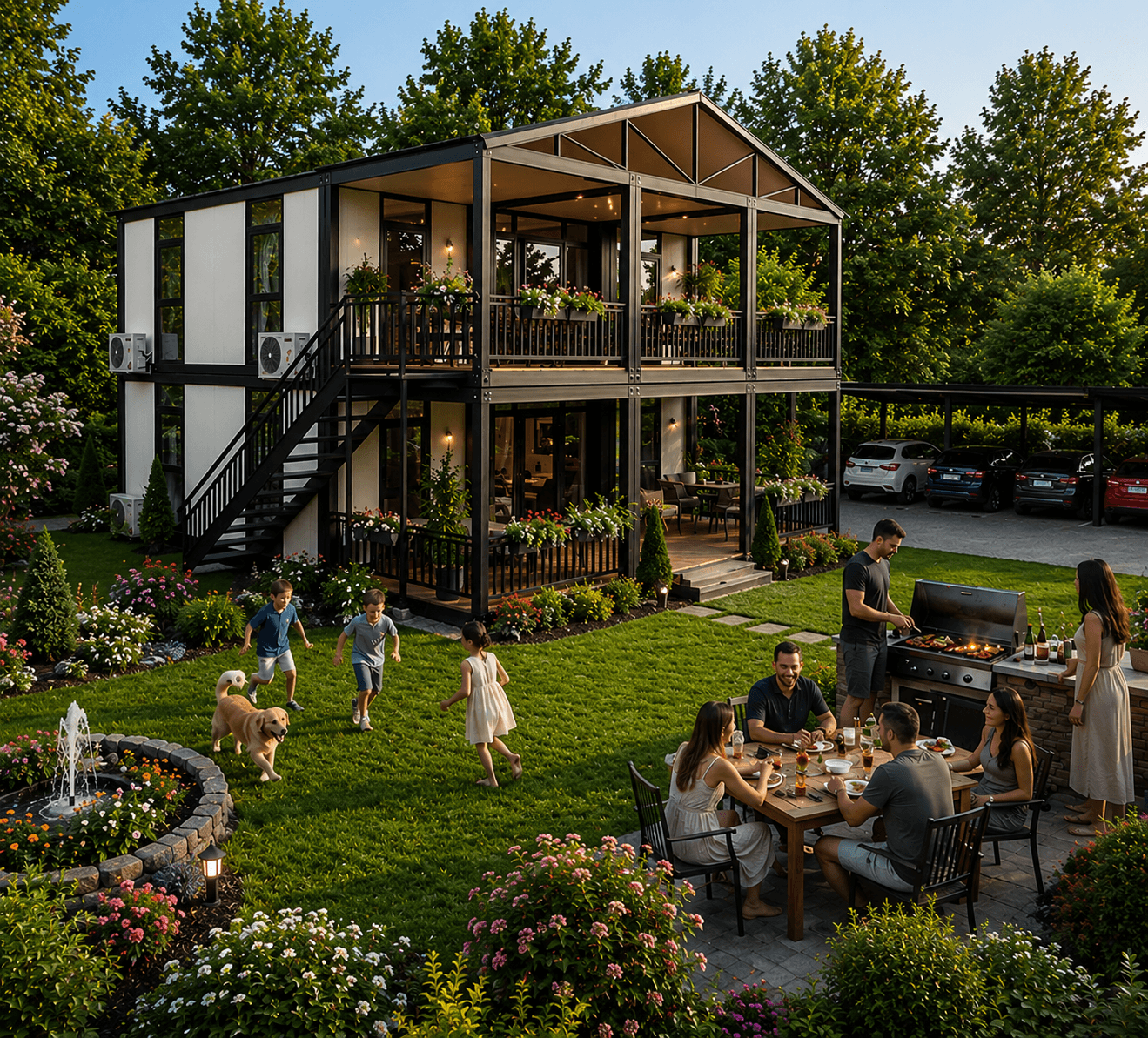
Expandable container homes and traditional site-built houses solve the same problem - shelter you own - in very different ways. Neither is universally "better." Here is an honest, category-by-category comparison to help you decide which fits your situation.
Cost
This is the clearest win for container homes. The structure itself is dramatically cheaper, and even after foundation, utilities, and site work, an expandable home typically lands 40-60% below comparable site-built construction. Traditional homes carry higher material, labor, and financing costs, and overruns are common. If budget is the priority, the container home wins.
Timeline
A traditional build commonly takes 6-12 months or more from breaking ground to move-in. An expandable home is manufactured in the factory while you prepare your site, unfolds in hours on delivery day, and is typically move-in ready within 2-6 weeks of delivery once utilities and finishing are done. For speed, the container home is in a different league.
Customization
Traditional construction offers essentially unlimited customization - any size, any layout, any material - which is its real advantage. Container homes are more constrained: you choose from defined sizes and floor plans, then customize colors, finishes, flooring, cabinets, and upgrades. For most buyers the available choices are more than enough; if you want a fully bespoke 3,000 sq ft custom home, traditional is the route.
Durability
Both can last decades when built and maintained well. Container homes use a galvanized steel frame that is inherently strong, with metal roofing and dual-pane windows; longevity comes down to the foundation, drainage, and upkeep. Traditional homes have a long, proven track record. Call this one roughly even, with the caveat that quality varies more between container-home sellers than between licensed home builders.
Resale
Traditional homes have deeper, more established resale markets and standardized appraisal. Container homes are a newer category, and resale can depend on local demand and how the home is classified. If you are buying primarily as a long-term financial investment with predictable appreciation, factor this in.
Financing and insurance
Traditional homes qualify for conventional mortgages and standard homeowners insurance. Container homes, classified as temporary or personal property in many areas, are harder to finance with a traditional mortgage - buyers often use personal-property or chattel loans - and are insured through specialty manufactured/modular insurers. Our 25/25/25/25 payment plan also reduces the need for financing by spreading payments across the build.
The bottom line
Choose a traditional build if you want maximum customization, conventional financing, and the deepest resale market - and you have the time and budget. Choose an expandable container home if you want to spend far less, move in far faster, and place a quality home on rural or unrestricted land. For a huge share of buyers - first homes, rentals, ADUs, vacation places, and off-grid living - the container home is the smarter choice. Explore the lineup and talk to our team about your goals.