

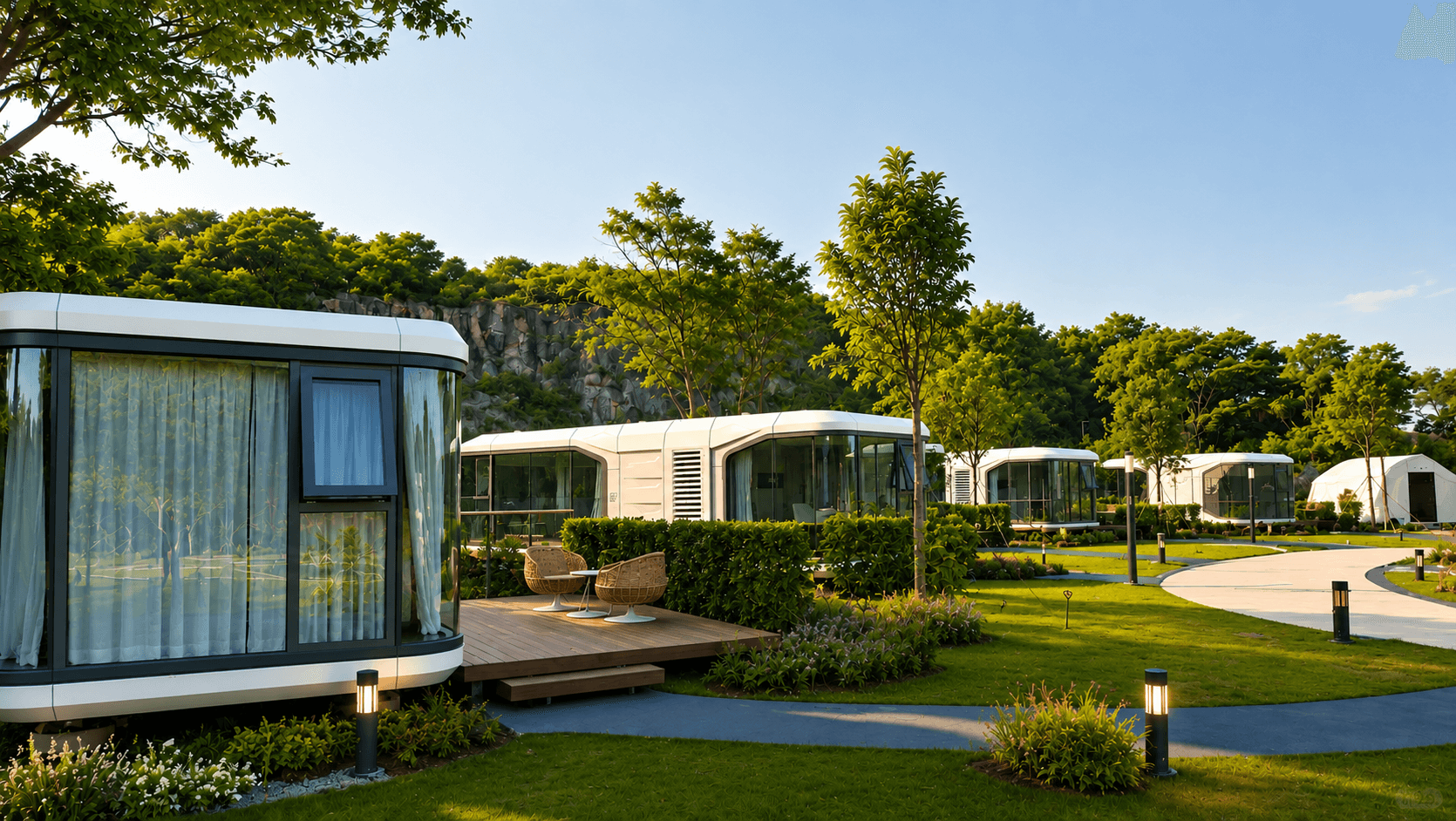
FAQ
Everything YouNeed to Know
Honest answers about cost, permits, delivery, off-grid living, financing, and finding the right land for your Bright Box Home.

Buying & Cost
The listed price - $35,995 for the 20x10 up to $59,995 for the 20x40 - is the home itself, fully built and equipped. Your total project cost depends on your site. Plan for freight from port to your property, a foundation ($3,000-$15,000 depending on slab, piers, or helical piles), utility connections (electrical service and water/sewer or septic tie-ins), permits, and site prep. A realistic all-in budget runs well above the sticker price - but our 25/25/25/25 payment plan spreads the home cost across four milestones so you never pay more than 25% at once.
Everything factory-installed: a mini-split HVAC system, tankless water heater, two-burner cooktop, dual-pane windows, a covered front porch, a 200-amp electrical panel, washer/dryer hookups, a garbage disposal, and a walk-in shower. You also choose from 39 exterior colors, interior flooring, wall panels, and cabinet colors - all included in the base price.
Land, foundation, permits, delivery and freight, a septic system, utility trenching, the electrical service connection, a water meter, decks beyond the standard porch, skirting, engineering or surveys, and the local contractor labor to tie utilities in. These vary too much by site to bundle into the home price.
For the structure itself, yes - significantly. Once you add foundation, utilities, permits, and site work the gap narrows, but an expandable home is still typically 40-60% less than comparable site-built construction and goes up in a fraction of the time. The savings are real; just budget for the full project, not only the home.
Financing
Both are possible but differ from a traditional home. Because these are classified as temporary structures in most jurisdictions, conventional mortgages are difficult - many buyers use personal-property or chattel financing, and we can point you toward partners like Acorn. Insurance is available through specialty insurers that cover manufactured and modular structures, typically as personal property rather than real property.
Permits & Placement
It depends on your jurisdiction. Bright Box Homes are classified as temporary structures, which in most areas do not require full building-code compliance. The easiest path by far is unrestricted rural land - no zoning overlay, no HOA, and minimal permitting. City and county rules vary widely, so always confirm with your local building department before you buy.
Rural land is our number-one recommended placement strategy. Many rural counties have minimal or no zoning. Look specifically for 'unrestricted' land - no deed restrictions, no HOA, and no residential design standards. Before buying, verify flood-plain status, setback requirements, and utility or well/septic access. Unrestricted acreage is where expandable homes are easiest to place and live in legally.
Usually harder. Municipalities enforce zoning, residential design standards, foundation specifications, and occupancy permits, and some restrict temporary structures outright. A few cities allow them as accessory dwelling units (ADUs). Check your local ordinances first - but rural, unrestricted land remains the simpler path.
Bright Box Homes are classified as temporary buildings and do not require local building-code compliance in most jurisdictions. They can be built and outfitted to meet certain specifications, but final approval always depends on your local jurisdiction. Consult your building department about how a temporary structure is treated where you intend to place it.
All are common uses, each with its own rules. ADU regulations vary by city and state; guest houses usually fall under accessory-structure rules; rentals require local landlord-tenant compliance; and office or commercial use needs commercial zoning or a home-occupation permit. Confirm the specific use you intend with your local authority.
Delivery & Setup
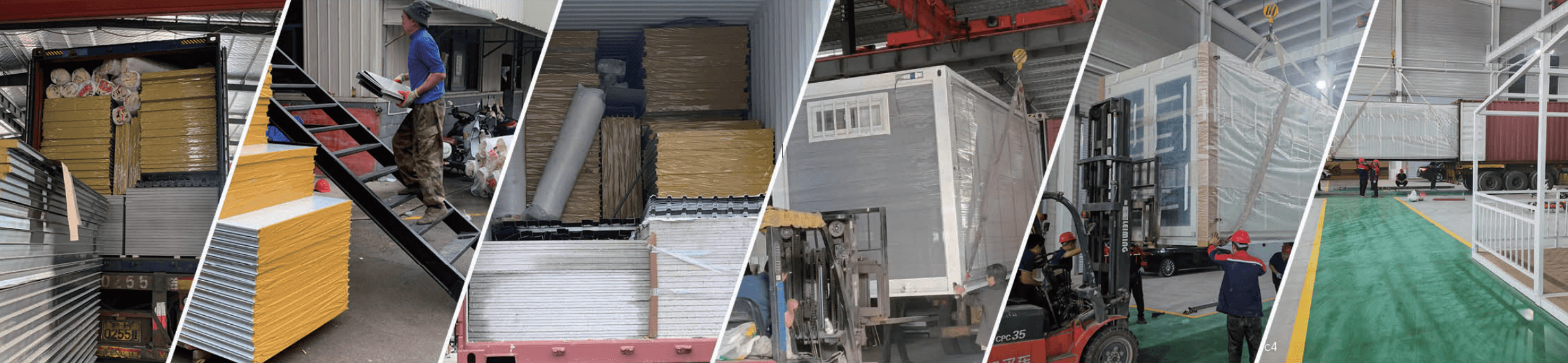
The home arrives on a tilt flatbed trailer, which tilts and slides the unit off onto your prepared blocks, piers or slab. Your site needs adequate road access, firm ground for the loaded truck, and a clear, level landing area behind the trailer. Bright Box coordinates the delivery logistics from port to property.
The unit itself unfolds and is placed in a matter of hours. 'Move-in ready,' though, also includes the foundation (days to weeks), utility connections (days), any required inspections, and finishing like decks or skirting. A realistic timeline is 2-6 weeks from delivery to move-in, depending mostly on how prepared your site is.
At minimum: a level pad or foundation, an access road wide enough for a truck pulling a tilt flatbed trailer, utility stub-outs (electrical, water, sewer or septic), a cleared work area, proper drainage grading, and compliance with any setback requirements.
Utilities & Off-Grid
Homes arrive with plumbing and electrical rough-ins already installed, plus a factory-installed water heater, HVAC, and appliances. On site, a licensed electrician connects the panel to your utility service and a licensed plumber ties into water and sewer or a septic system. It is the 'last mile,' not a full build-out.
Yes - it is one of the most popular setups. Add a solar package (8kW or 10kW kits), battery storage, and a generator (15kW-22kW), pair it with a septic system, well or rainwater collection, and propane for cooking. Bright Box offers solar-ready and generator-ready packages factory-installed, and unrestricted rural land is ideal for going fully off-grid.
Durability & Comfort
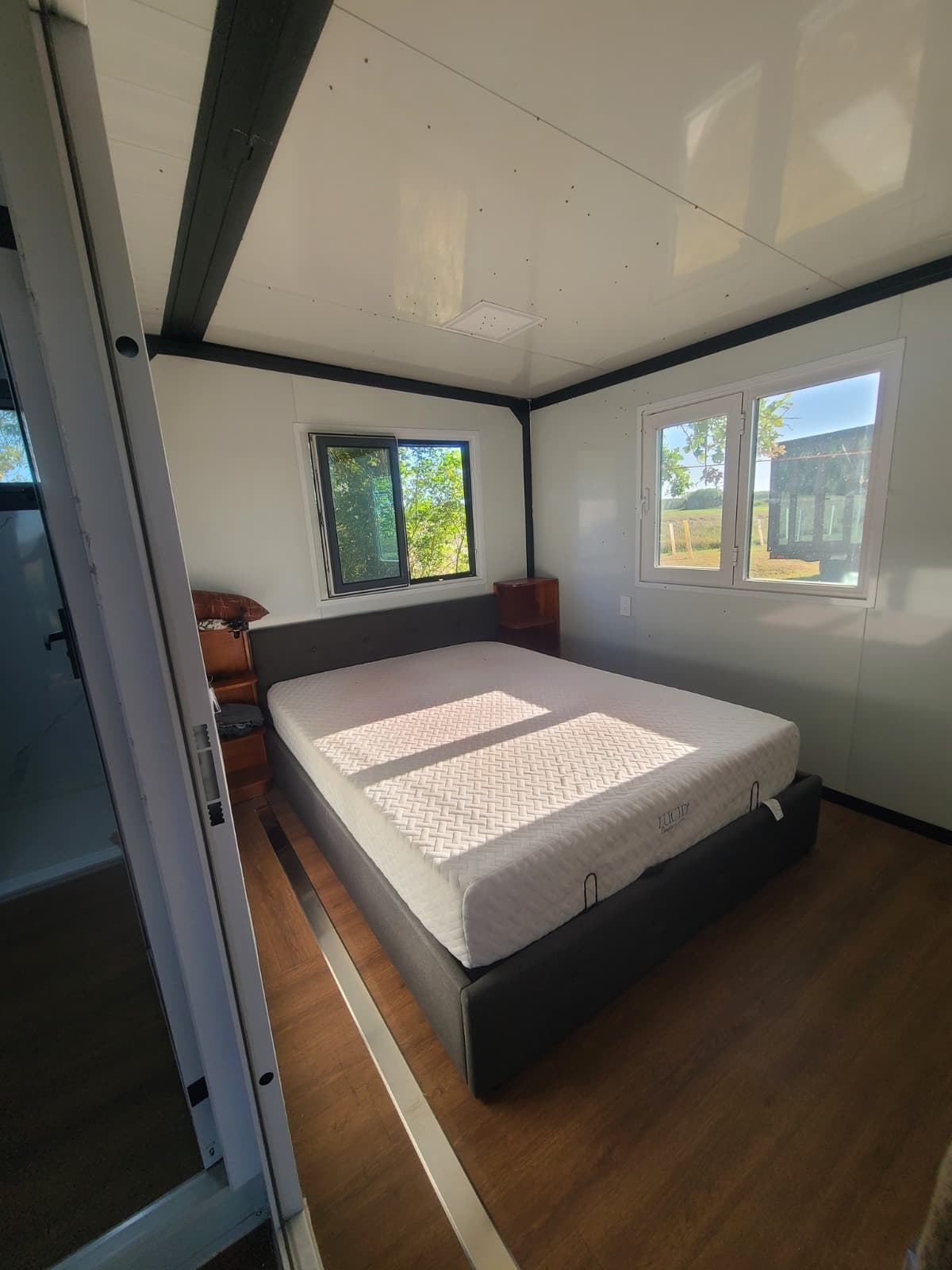
Yes. Expandable homes are built on a galvanized steel frame - the same rugged structure as a shipping container - with optional 24-gauge metal roofing, dual-pane windows, and proper insulation. Long-term durability comes down to a quality foundation, good site drainage, and routine maintenance.
Standard insulation is included, with a 3-inch Rockwool upgrade available for extreme climates. The 24,000 BTU mini-split handles both heating and cooling, dual-pane windows cut thermal transfer, and ceiling air movers improve circulation. For Texas heat or cold-winter regions, we recommend the insulation upgrade.
Condensation is possible in any tightly sealed structure that is not properly ventilated. Bright Box homes include ventilation, HVAC, and insulation to minimize it, and proper site drainage plus a sound foundation prevent moisture intrusion from below. Follow the ventilation guidance and it is very manageable.
Use Cases
Five expandable sizes: 20x10 (studio, ~200 sq ft), 20x20 (~400 sq ft), 20x30 (~600 sq ft), 20x40 (~800 sq ft), and the 20x20 Duplex (two-story, ~800 sq ft combined). Beyond the expandable line we also offer Apple Cabins, Space Capsules, Assembly Homes, and Emergency Housing.
Yes. Choose from 39 exterior colors, 19 roof colors, interior wall colors, flooring options, cabinet colors, and bathroom wall designs. Kitchen and bathroom locations follow the floor plan you select, but the finishes throughout are yours to customize.
Quality & Trust
Quality varies enormously between sellers. Bright Box Homes works with vetted factory partners, runs pre-ship photo and video inspections, and gives you a 7-day no-defect inspection window after delivery - protections many overseas sellers do not offer. Before buying from anyone, verify steel gauge, weld quality, insulation type, US-standard 120V/240V electrical, plumbing compatibility, and warranty terms.
Check the steel gauge and frame quality, weld consistency, hinge mechanisms, roof pitch and drainage, weatherproof seals, the floor system, the electrical panel rating, plumbing layout, insulation R-value, window and door quality, certifications, and warranty terms. A reputable seller will share all of this before you commit.
Still have questions?
Our team is happy to walk you through anything - from land to delivery to financing.
800-259-1745 · info@brightboxhomes.com